
MIDI
Many of our plugins can be controlled by MIDI. For example Duck can trigger its envelope when a MIDI note is received, Infiltrator supports MIDI controllers, envelope triggering and toggling its effects on and off using a MIDI keyboard, and Pitch Monster will turn your voice into chords while you play a MIDI keyboard. Read the plugin's manual for how to enable and use the MIDI input.
But no matter which of our plugins you use, the procedure in your DAW for routing a MIDI signal to the plugin is the same.
Some of our plugins also accept audio input, for information about routing audio please look here.
Steps
- Open the plugin window for the Devious Machines product you would like to route to and ensure that it is in a mode that receives MIDI. This is different for each product so please refer to the manual if you are unsure.
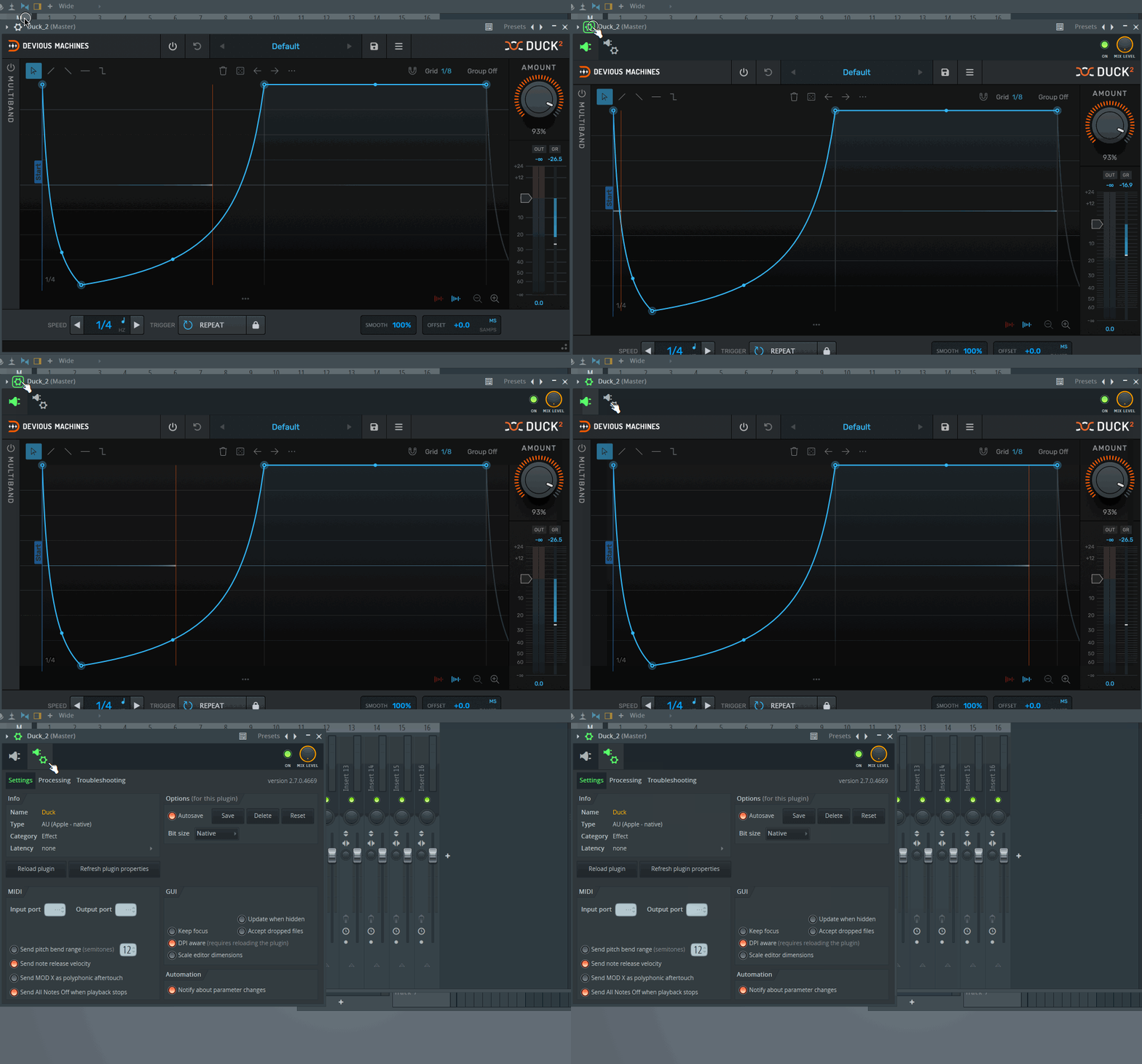
- In the plugin window, select the setting cog in the top left (just above the Duck logo) to access the Plugin Wrapper settings. A bar will pop up below where you clicked. Select the button to the right of the plugin window tab.
- In the MIDI section at the bottom left, change the 'Input Port' to a channel number - change this number to a value that meets your setup.
The default port number is 1, if you are unsure you can set it to this number. Our plugins will accept from any port number.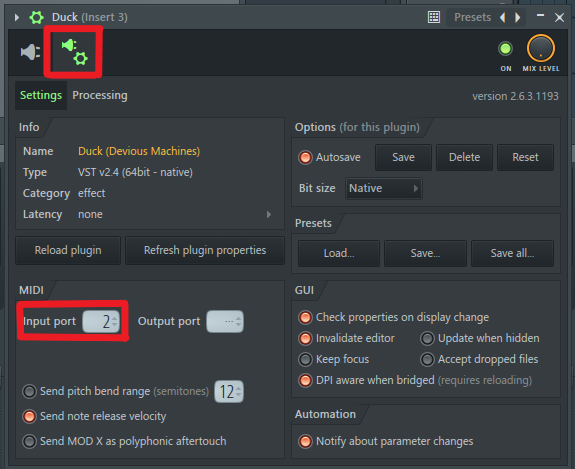
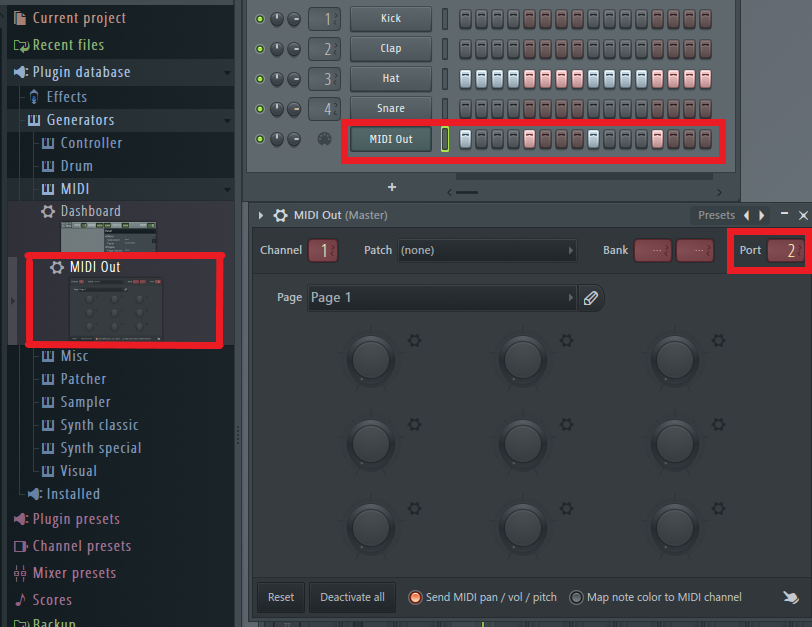
- Then add a new MIDIOut channel to your project. Change the port number to the value you set in step 3. In the MIDIOut UI, there is also an option to set the Channel number. Same as before, the default for most plugins is channel 1. So if you are unsure, set the channel and input port to 1 each time.
If you are running a session with different plugins and hardware going to different MIDI ports then this will need to be considered when setting the port.
The additional thing to note, if the input port and channel are set to the number 0, the information is sent to all of the ports and channels which could produce strange behaviour if you have multiple active ports and channels. In any case, check to make sure your port and channel is not set to 0 if you are having troubles. - Add MIDI information that corresponds to the information you want to be sent to the DM plugin. This could be MIDI information on the Piano Roll of the MIDIOut track, below I have set it in the Channel Rack but the result is the same if there is a MIDI track in the timeline.
The other option is to assign MIDI CC/Controller information to the controller knobs which can be sent to plugins. Given the use case for this is specific, please feel free to send an email to our support if you get stuck here.
Patcher Alternative
The Patcher plugin is better if you want to keep everything self-contained in one channel, or if you're combining your Devious Machines plugin with other instruments/effects in a chain. Patcher will be the main instrument on your track, then the rest of the channel lives inside of patcher. This will only work if your main sound source going into the effect plugin is an instrument, it will not work for audio only tracks, in that case please use the MIDIOut method above.
Important note on plugin format: This method works reliably with VST2 versions of plugins. MIDI routing via Patcher can not work when using the VST3 versions of a plugin in FL Studio, so make sure you are loading the VST2 build of the Devious Machines plugin when using this method.
- In the Channel Rack, add a new Patcher instrument.
- Open the Patcher window. You'll see a "From FL Studio" node on the left — this is where MIDI/note data enters from the Piano Roll. Right click and select Patcher > Outputs > Events, then set the MIDI port to number 5.
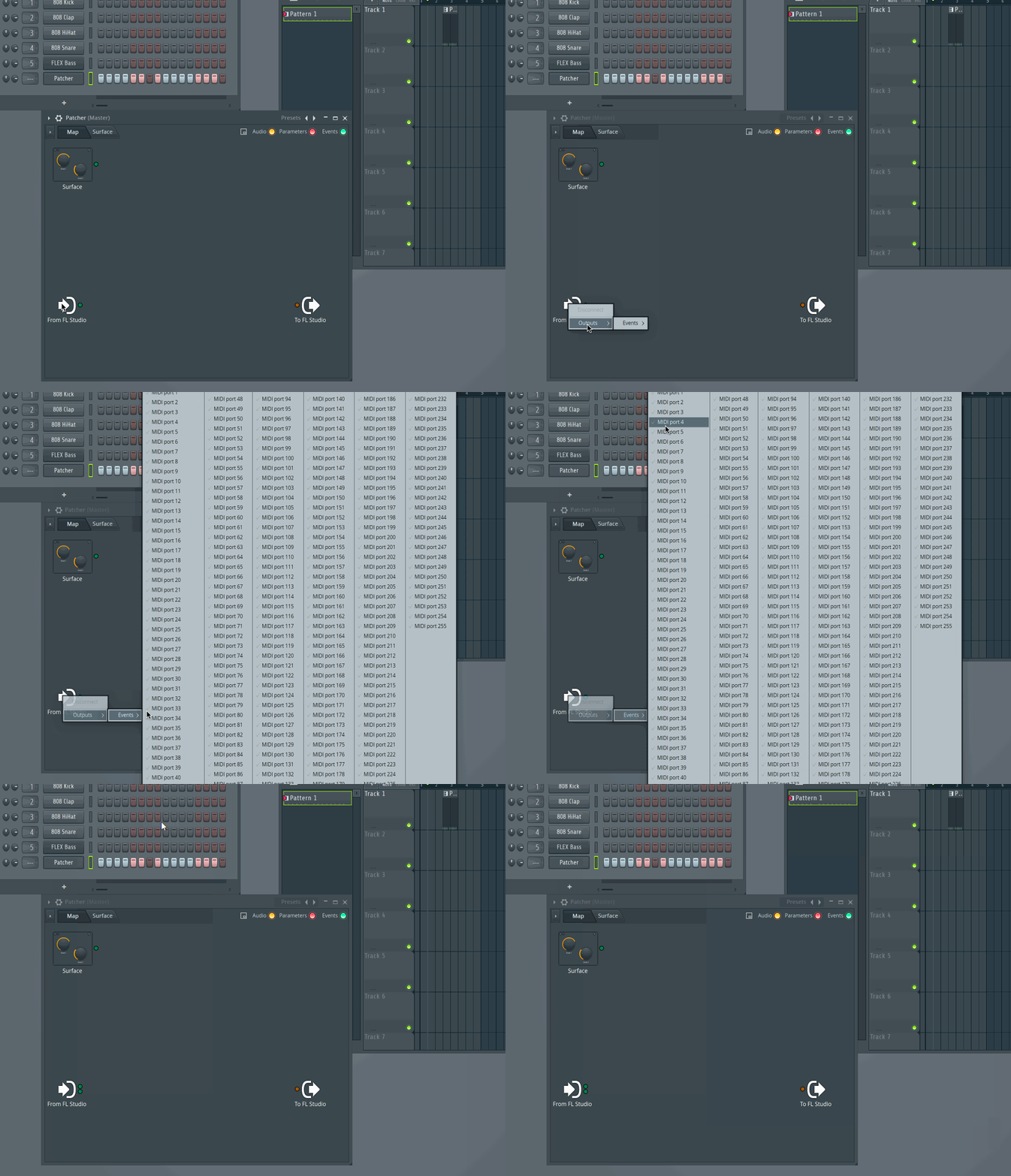
- Add a MIDIOut plugin to the patcher window and set the MIDI port to number 5.
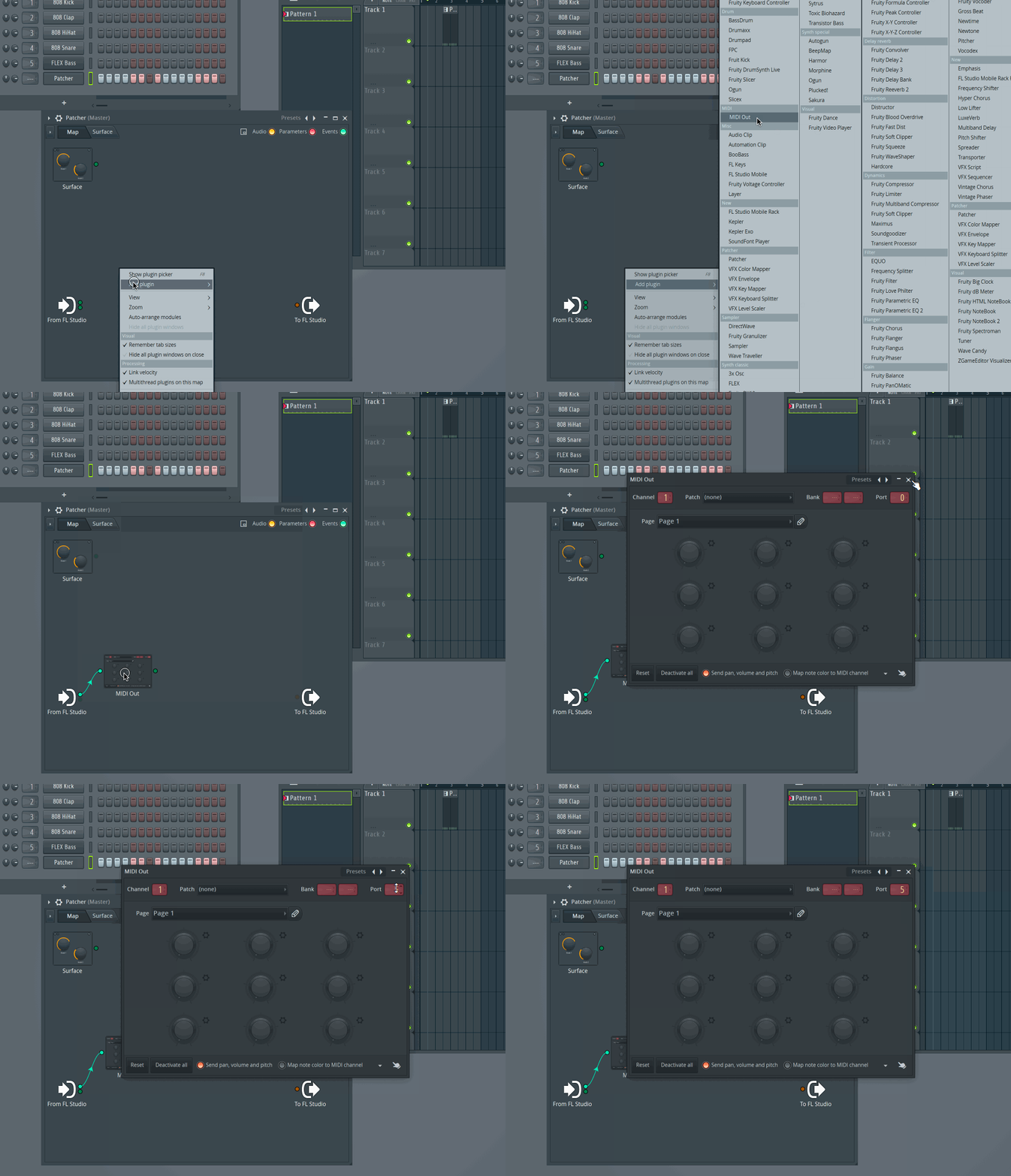
- Add the instance of your Devious Machines plugin to patcher. In the Plugin Wrapper settings set the MIDI Input port to number 5. Then make sure the plugin is set up to receive MIDI. Now any MIDI information on the patcher track will be routed through the Devious Machines plugin. Finally route the yellow output node from the Devious Machines plugin "To FL Studio"
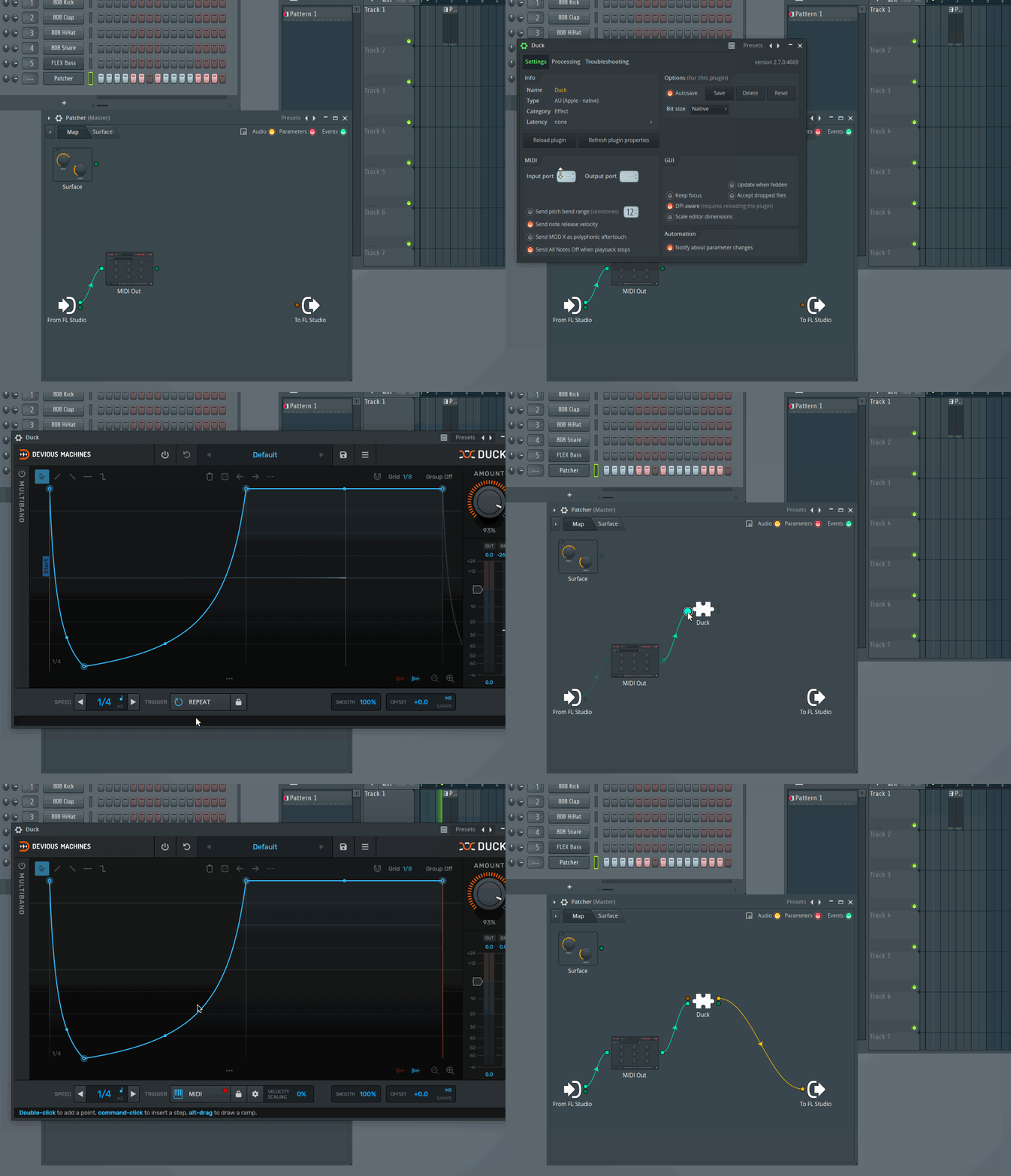
If you cannot find the Devious Machines plugins in the Patcher (usually Patcher is looking for Generators and not effects), drag in the plugin to the Patcher window from the browser instead.
This description is the basic setup, in a more practical example, there would also be an instrument track producing the sound, and any other plugins that are part of the track, contained within Patcher.
Troubleshooting
The MIDI Out channel needs to be armed/active — if using the piano roll, the pattern needs to be on a blank track in the timeline and the Piano Roll clip needs to be placed placed in the timeline where you want the MIDI events to trigger. This is the thing to note about MIDIOut is that it does not exist on the same track as your target plugin, but on its own track.
The plugin must be in the correct mode to receive MIDI, this is different for each of our plugins so please check the product manual to find out specifically how to achieve this.
Check the plugin type you are using. VST3 and CLAP especially can have a hard time with MIDI routing. If you are stuck, go ahead and try VST2 or AU as alternatives.
If you are still having troubles, feel free to contact us by sending an email to our support.